
Kyiv: The Life In Between the Sirens
Four years into Russia’s full-scale invasion, Kyiv’s daily life reveals not normalization of war, but a deliberate refusal to let it define the city’s identity.
I arrived in Kyiv mid December, as the city was preparing for Christmas celebrations. Cafes glowing against the winter dark and the continuous blackouts, shop windows filled with traditional Ukrainian images and ornaments. Couples stopping
beneath illuminated trees to take photographs. If you did not know better, you might have mistaken it for any other European capital preparing for the holidays - until the first air-raid alarm cut through the evening.
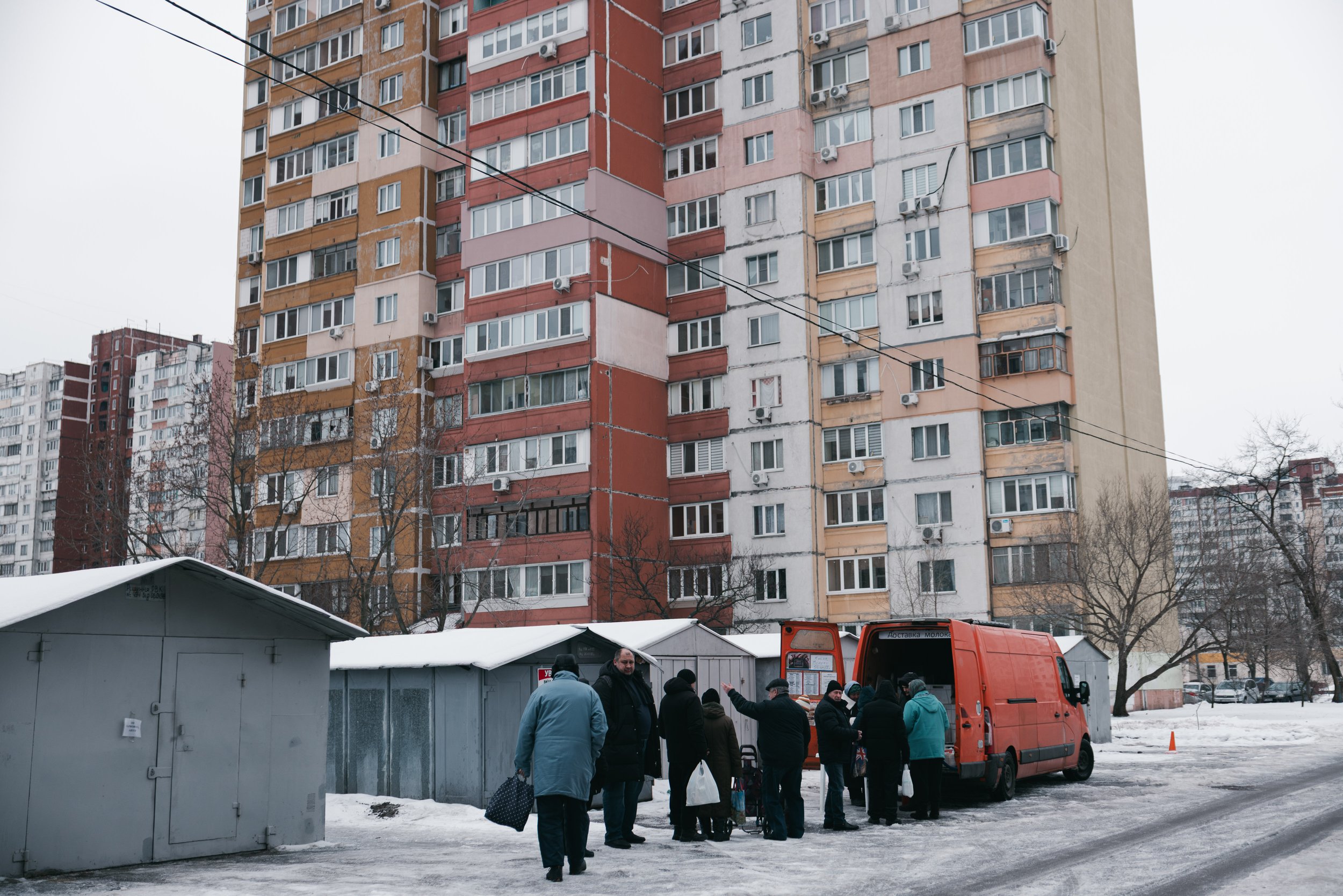
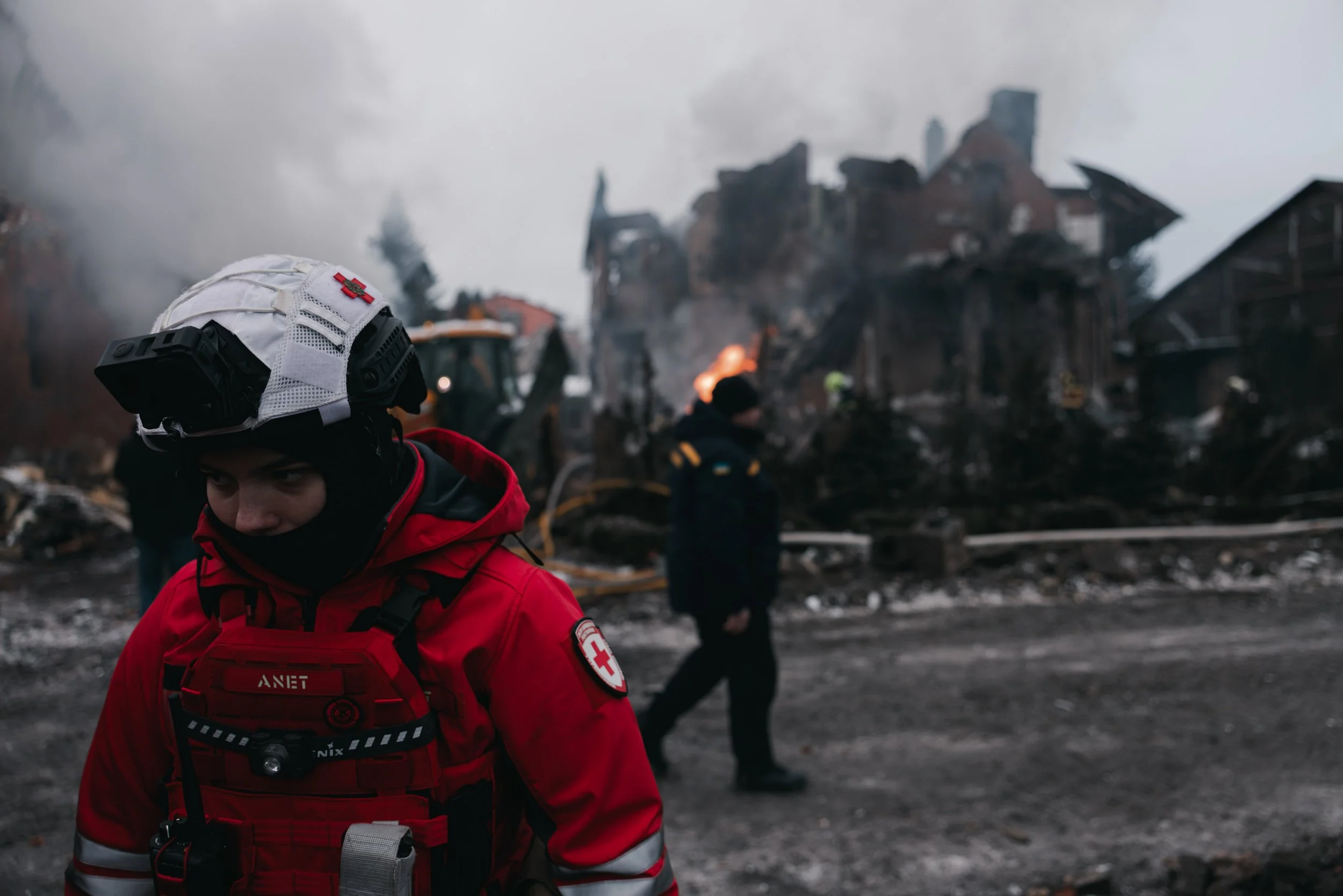
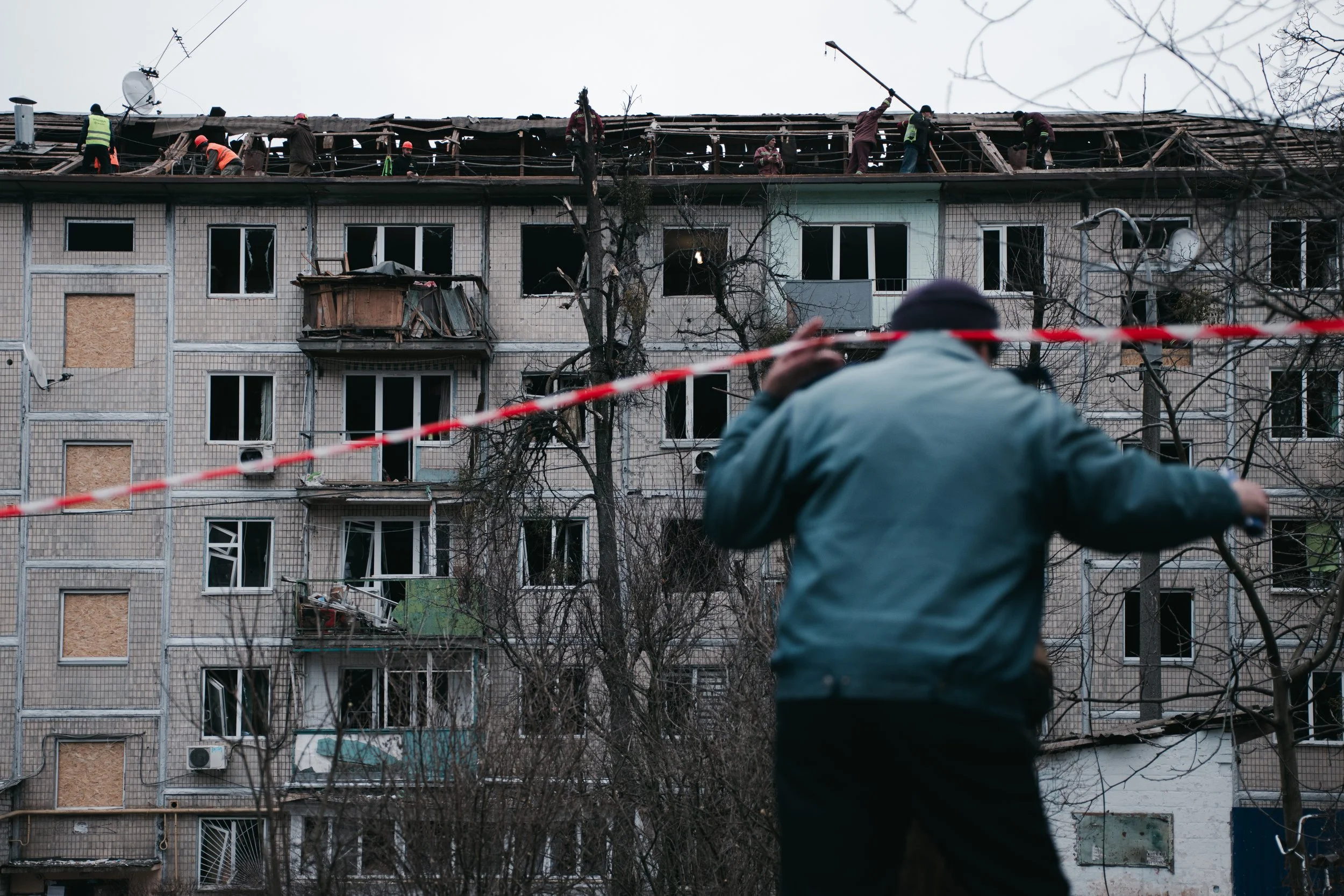
The first time I heard it, I ran to the shelter. The night stretched long, punctuated by alerts and distant reports of impact. Sleep came in fragments. Uncertainty filled the spaces between updates. By morning, the war was visible in daylight as well. In Kyiv, I stood in front of residential buildings whose upper floors had been torn open by shelling,
their interiors exposed to the winter air. Plywood covered shattered windows. Volunteers cleared debris from the sidewalks below.
The damage was not hidden - it existed alongside cafés and markets and streets full of people, as a part of the same cityscape.
In recent years, Ukraine shifted its Christmas celebration to Dec. 25, aligning with Western churches rather than Moscow’s calendar. The move is often described in geopolitical terms. However, being there, it felt more deep and personal.
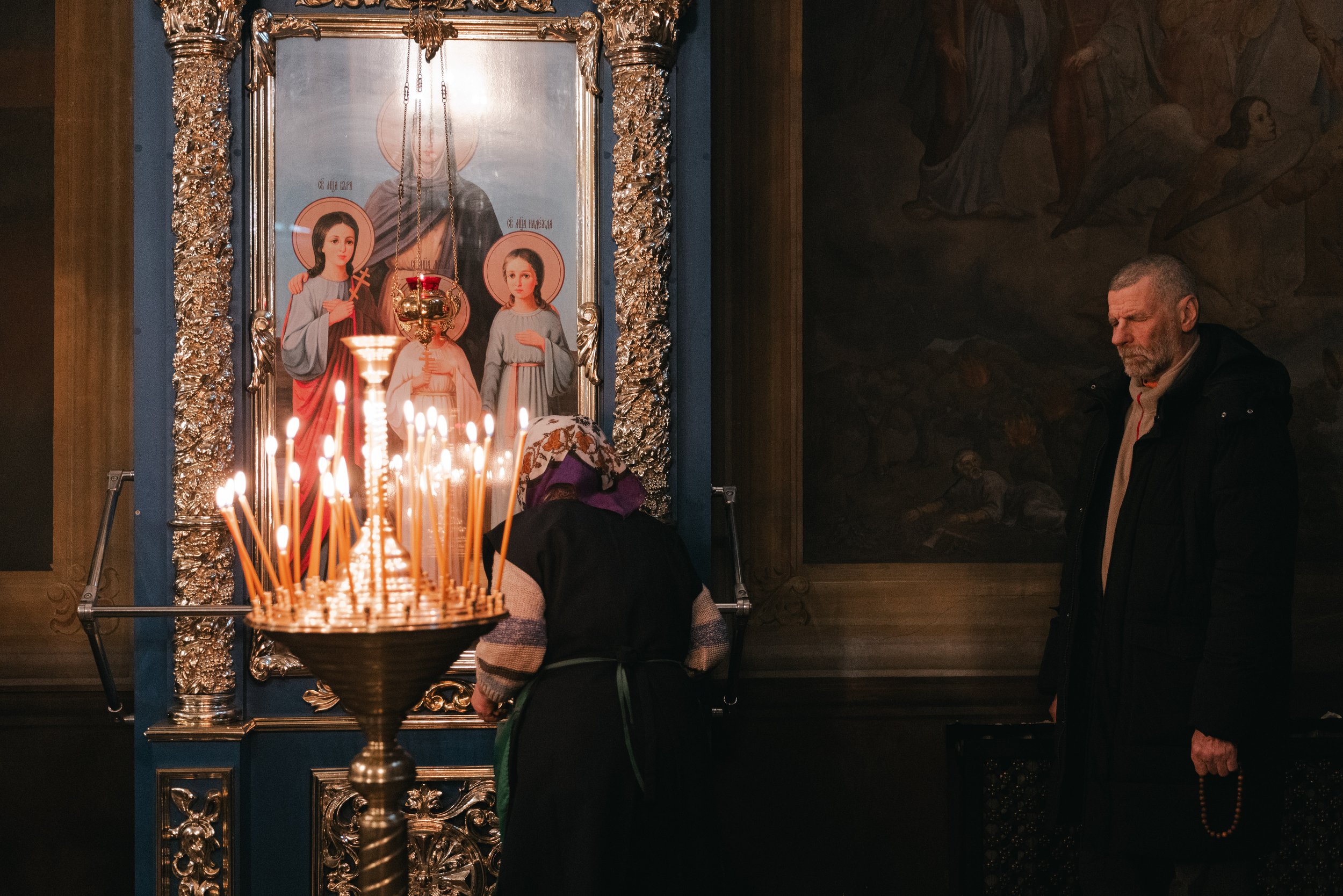
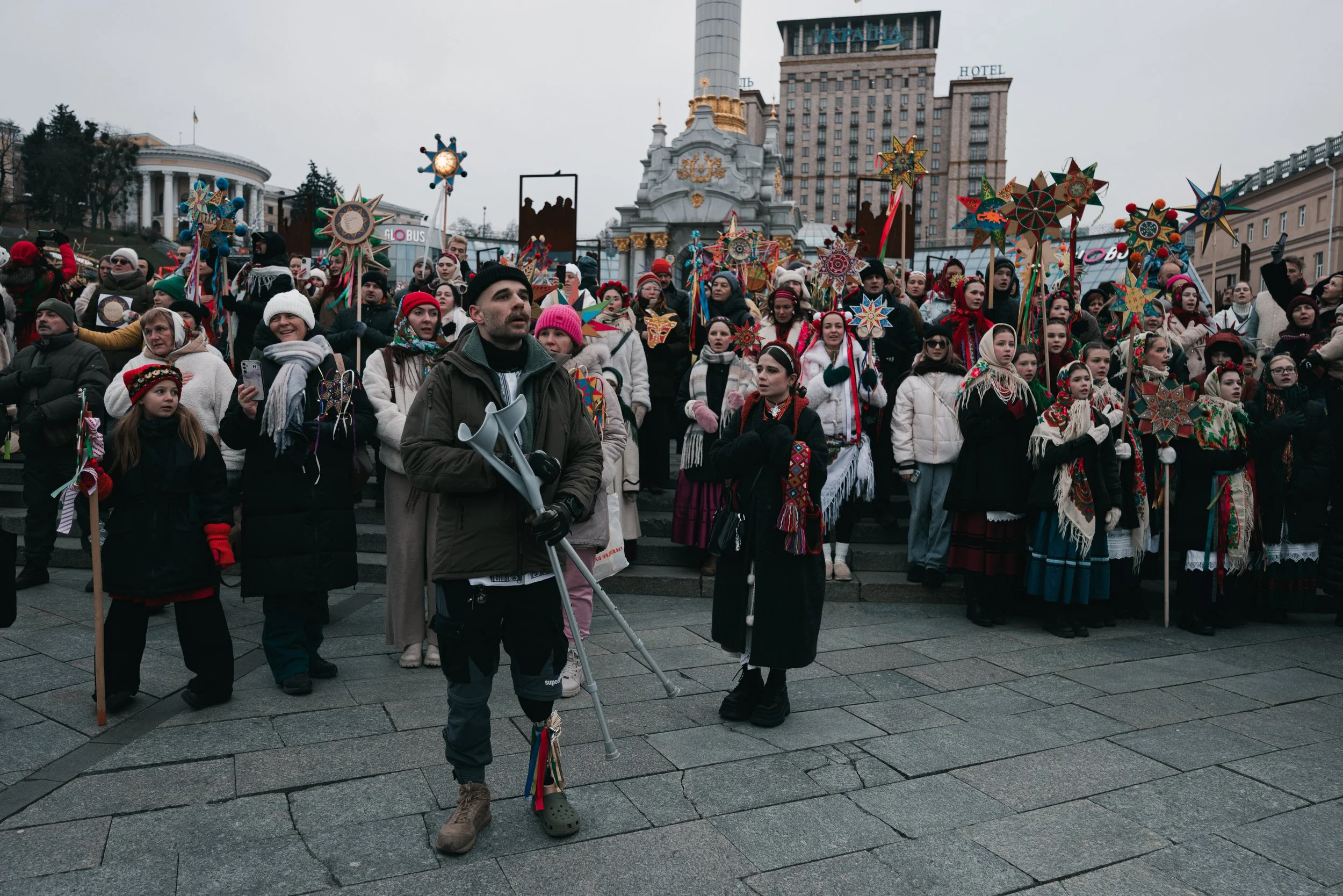
Churches were full. Citizens marched through the streets in traditional embroidered vyshyvankas, singing and celebrating,
during an air-raid alert. Resisting to be robbed of their peace, traditions and unity. The celebrations did not deny the war, they existed beside it.
For stretches of time, Kyiv insisted on looking like itself - until another big attack reminded everyone that identity now required not only resilience, but also alertness.
A short drive north from Kyiv, in Vyshhorod, the presense of war was written onto walls and windows.
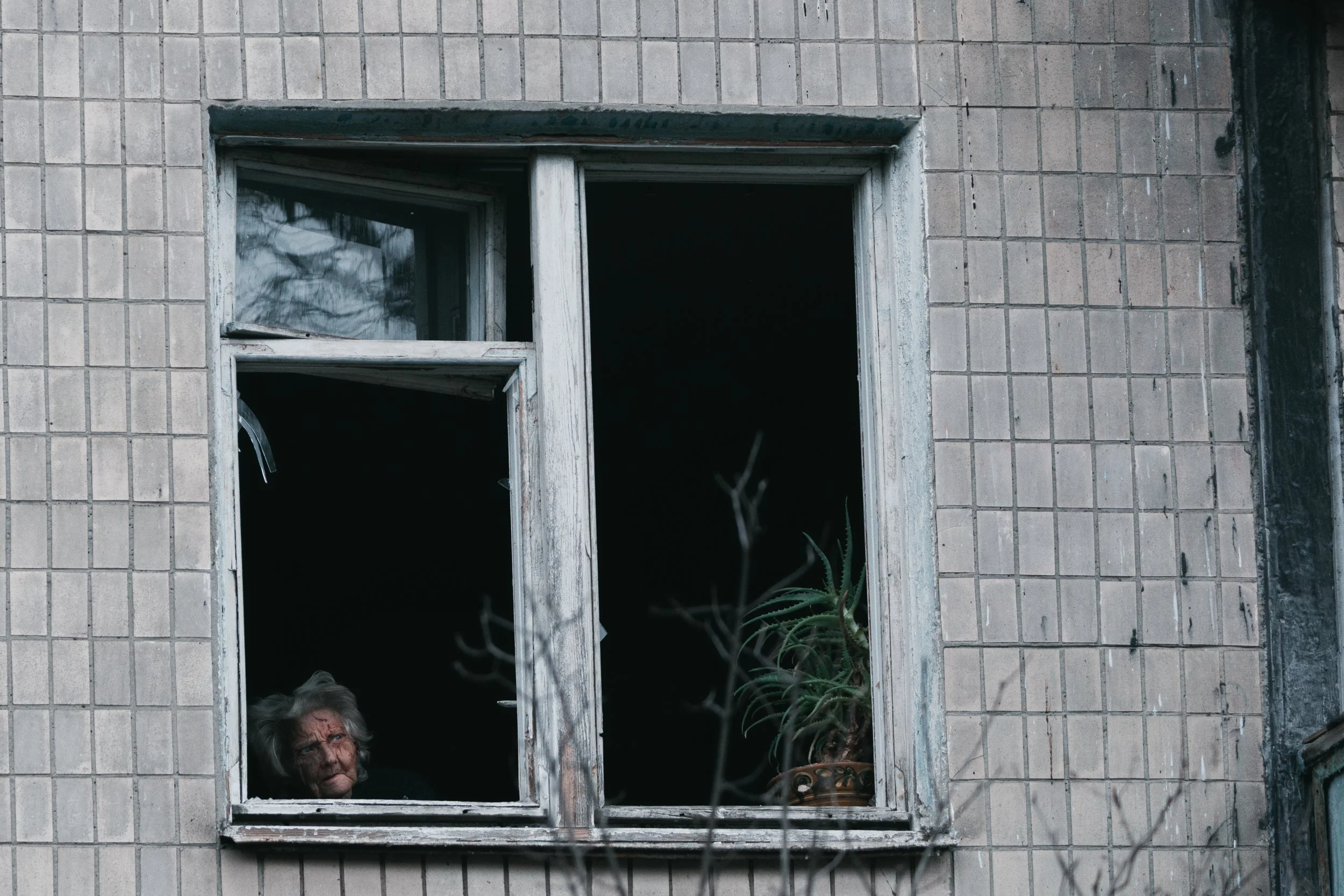
On one street, a residential building still bearing the scars of a drone strike from the previous month, stood as a reminder of reality. Personal belongings hanging on a tree in front of the building, a destroyed facade, and the entire life of its previous inhabitants exposed like a picture of destruction.
Across from that building, in a studio lined with illustration boards, I met with a young architect and illustrator who had lived through the full arc of the invasion. When the war started, she told me, she had thought about leaving, her parents begged her. Many of her friends did.
The first weeks were defined by fear - the human instinct to escape and find safety elsewhere.
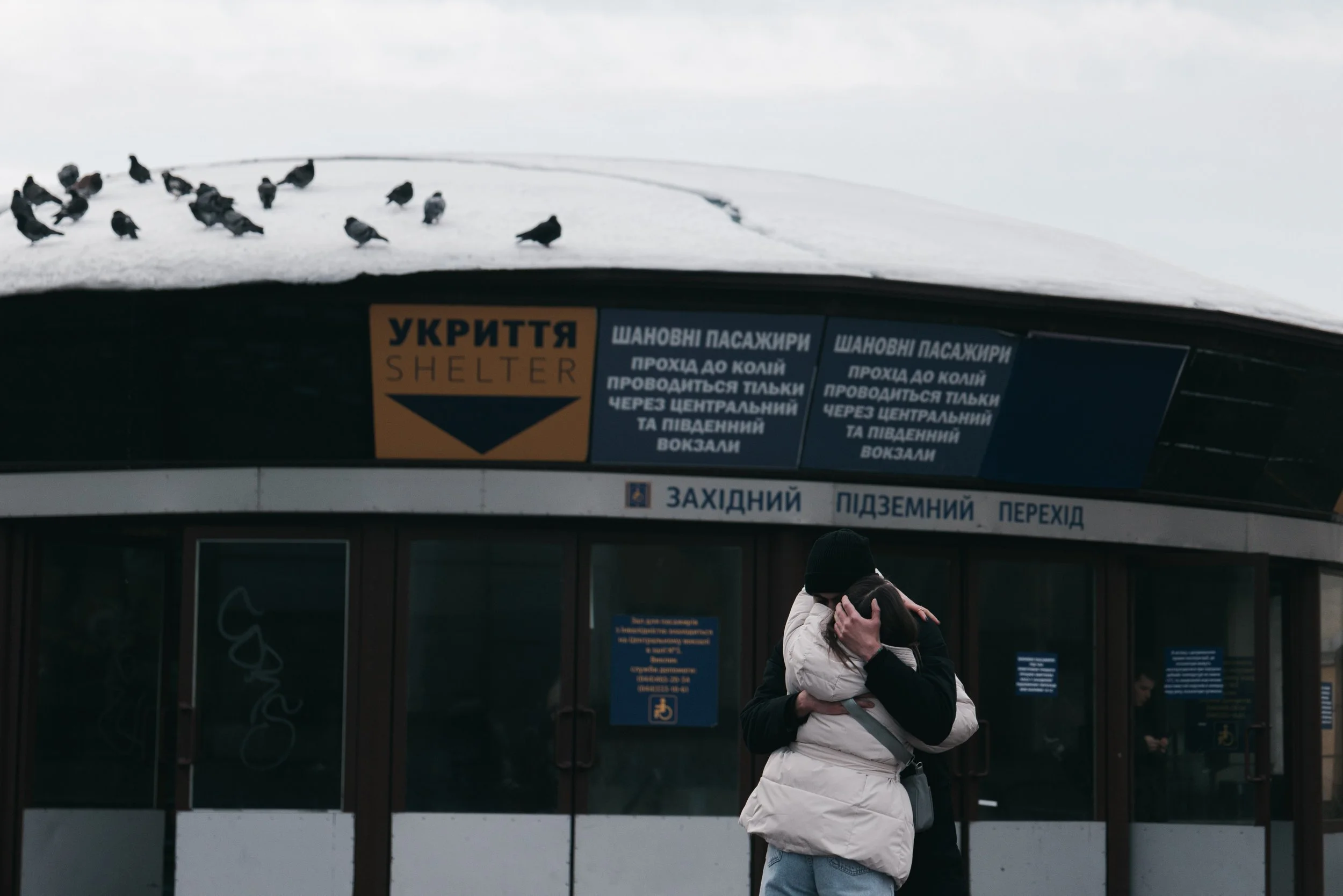
Belonging is no longer abstract. It is a daily decision, measured against risk. As an architect, she sometimes imagines the consequences of attack, analyzing the possible destruction.
She spends her days looking out of a window to a building opened by a drone’s impact, but inside she continues to draw new ones.
“But once the first fear passed”, she said, “I realized Ukraine is the only place I want to be.”
She described the shift not as bravery but as realization. The war, she said, had made her more grounded - less shaken by each new alarm - and more rooted in where she stood. Foundations, once theoretical, have become personal.
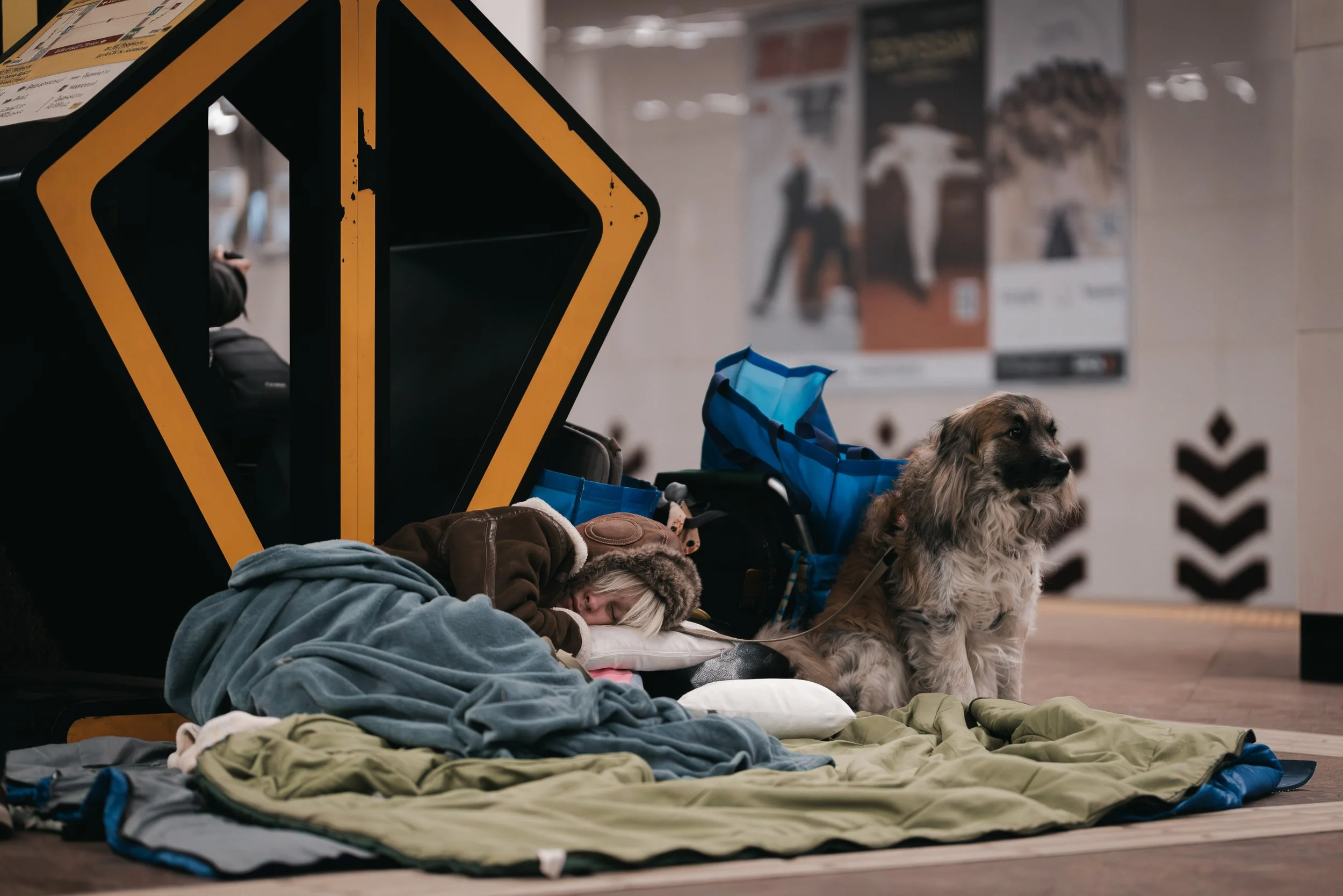
people reading books or just sleeping through the night safely.
During these weeks I saw more evidence of how the city adapted without surrendering to disruption.
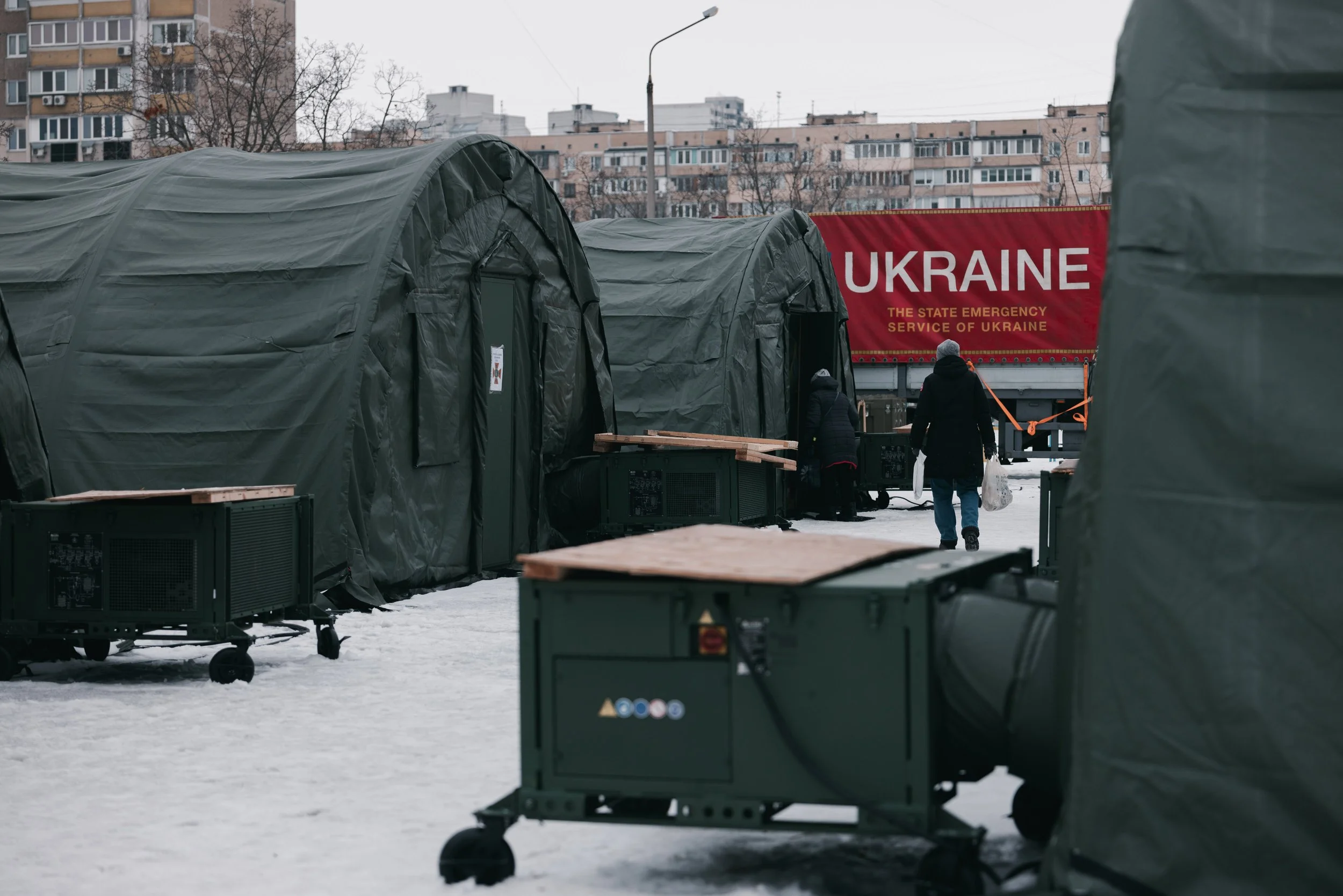
Above ground, the State Emergency Service had established what it calls “Resilience Points”- heated tents and public buildings equipped with generators, warm food and internet, designed to keep daily life functioning during blackouts and after attacks. From afar, such adjustments can look like normalization. They are not.
When I returned in late January, the winter felt heavier. So did my reaction to the air-raid alerts. I no longer ran, I would reach for my phone, analyze the alerts, weigh the warning against exhaustion and the morning ahead.
Some nights I went downstairs, some I stayed in bed. Ukrainians had been making that calculations for nearly four years. When the threat felt immediate, the city moved with quiet efficiency. Metro stations filled with families wrapped in blankets, children and their pets laying on mattresses on the ground,
War seeks to uproot, to scatter people from their histories and sever them from place. What I witnessed in Kyiv was not a city getting used to war, but a society building resilience as a refusal to let danger dictate the boundaries of its life. A deliberate insistence on remaining grounded. On being rooted, to continue building and celebrating in the space between danger.
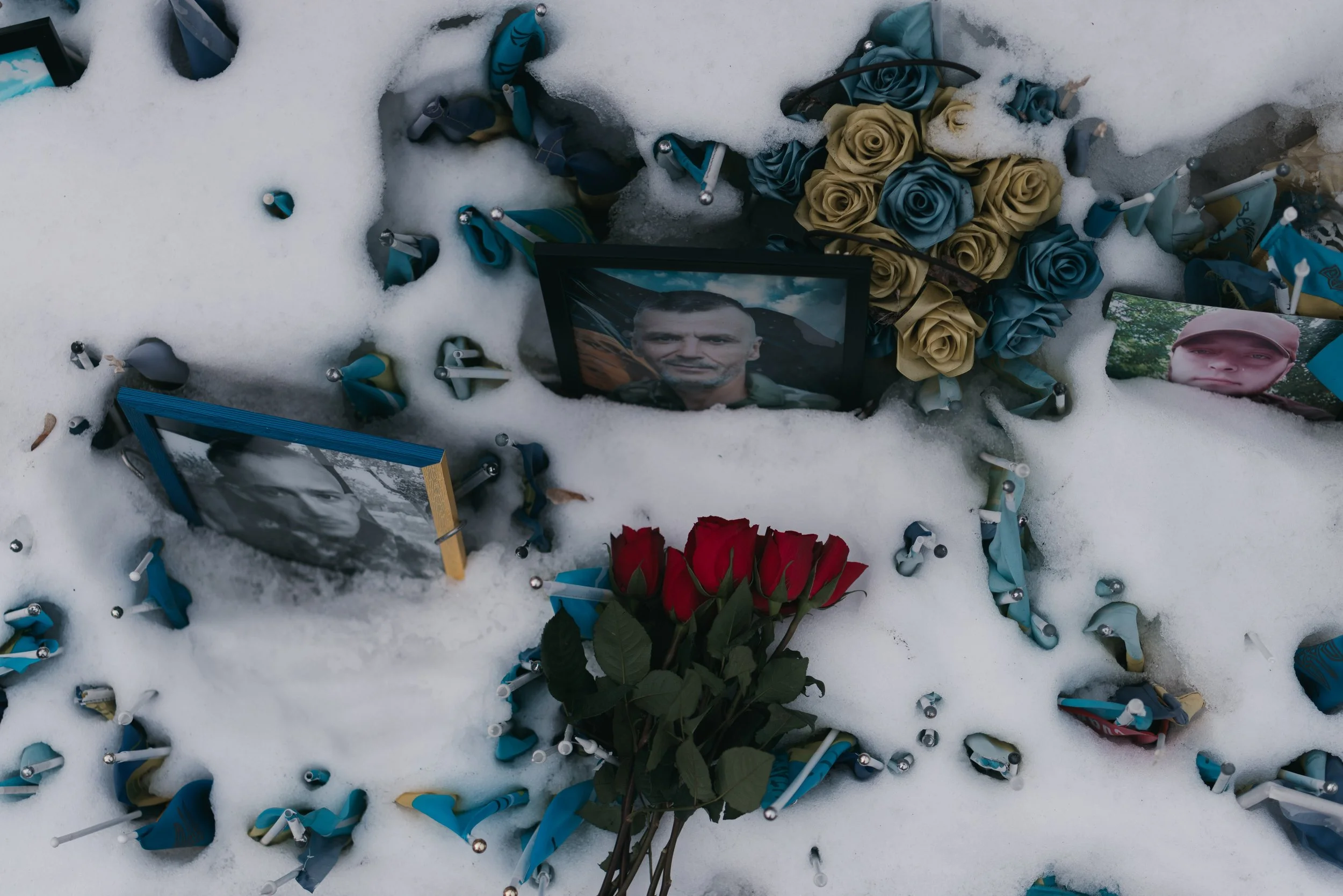
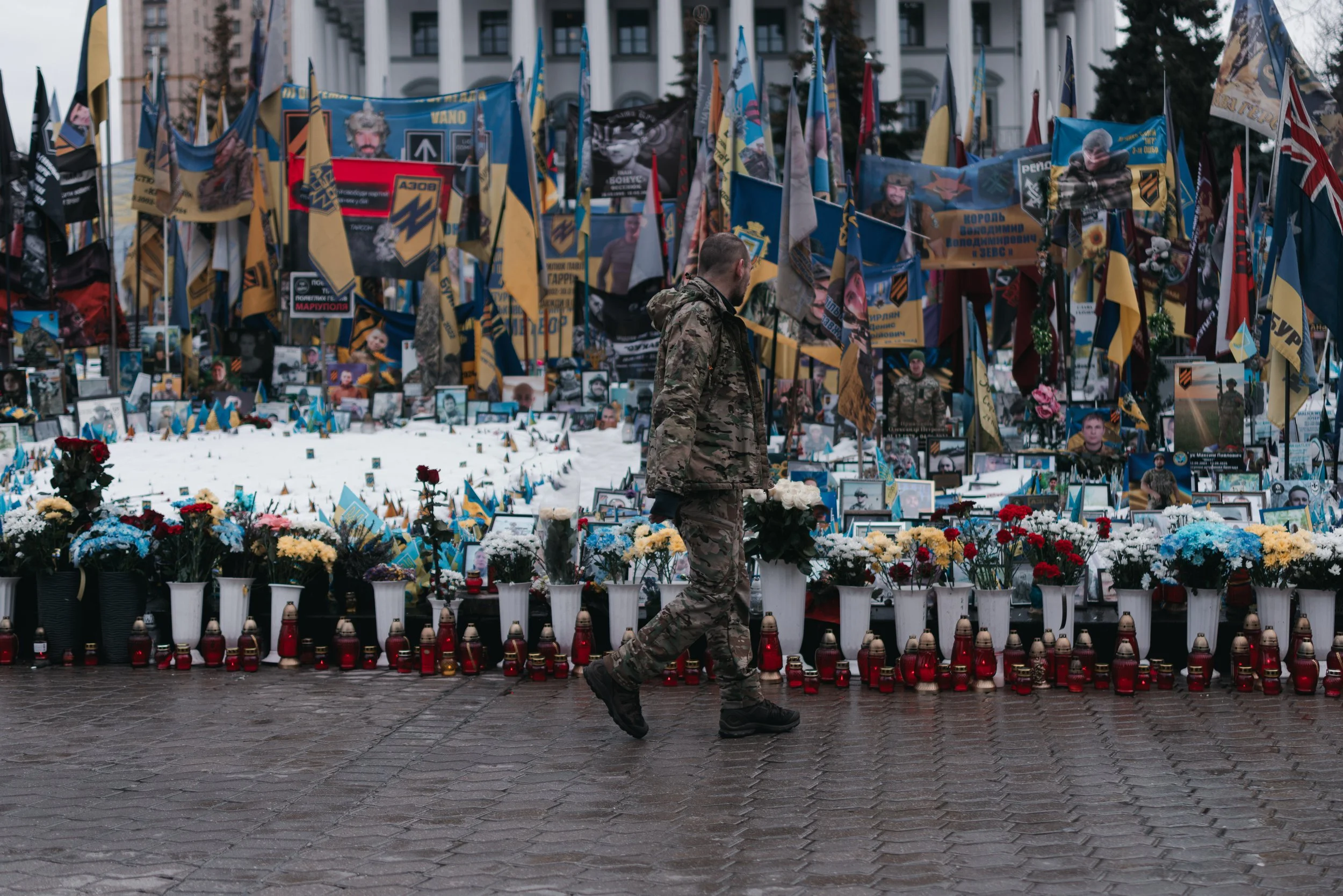
Four years into the war, Ukraine can begin to feel like a constant - tragic, familiar, but distant. The memorial at Maidan continues to grow, beneath a forest of flags and rows of weathered photographs, the cost of staying is laid bare.
Faces stare out from laminated frames - sons, daughters, fathers - each image a quiet testament to absence. Families still wait for prisoners of war to return. No one I met spoke of the conflict as if it was fading.
Meanwhile international debates reduce it to funding packages and strategic calculations.
The headlines blur.
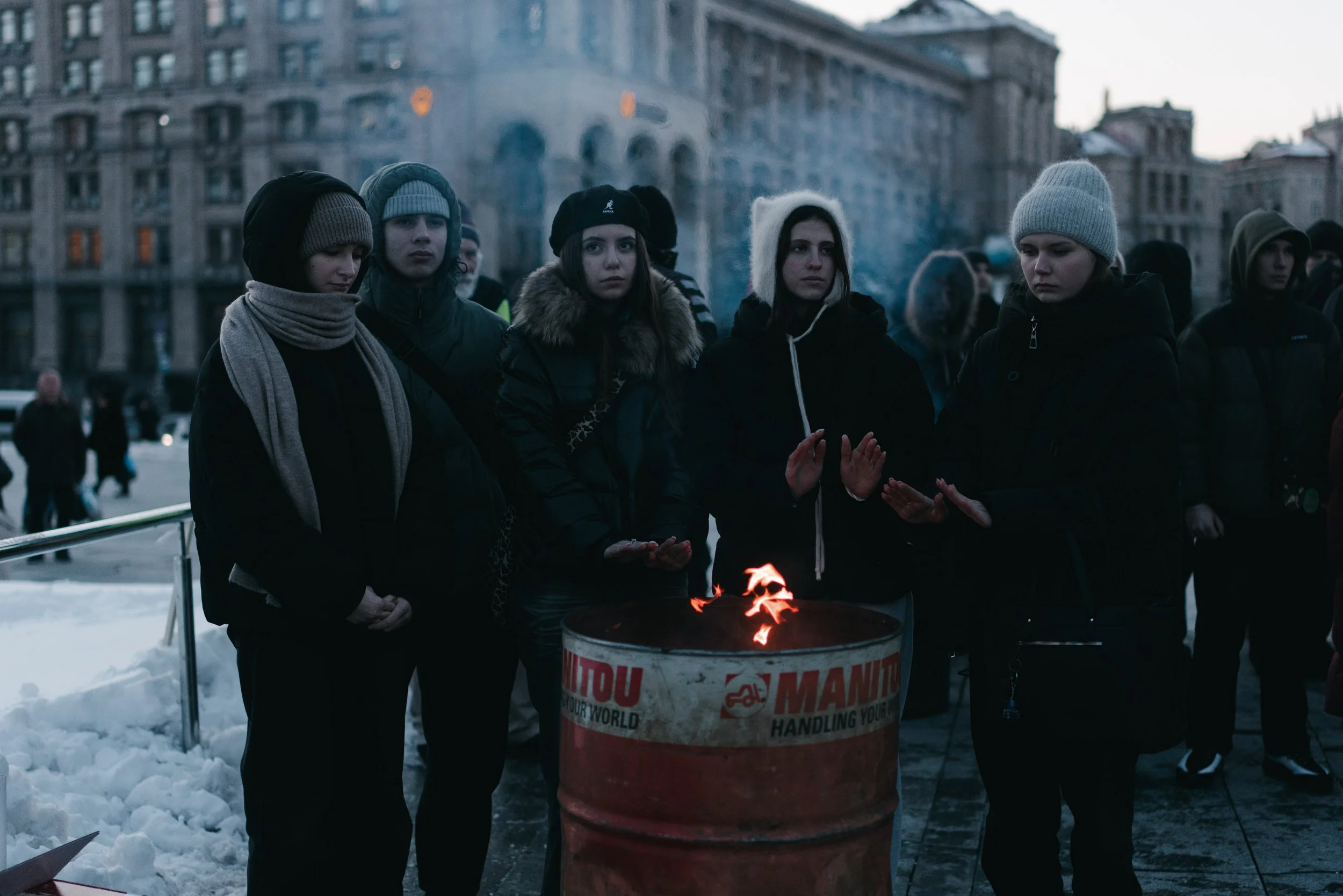
Support from outside is often framed in military or geopolitical terms. On the ground, alongside the grief, it sustains something more deeper: a clarity of purpose and the ability of society to remain itself. A society able to light its streets at Christmas despite the attacks on the energy infrastructure. A society able to celebrate its traditions singing through the streets even when the threat in the sky above them exists. People that dance in the cold with neighbors to warm up during heating disruption.
And the war has not become ordinary.
It has become the condition against which every ordinary act is measured.
For many Ukrainians, even those living behind splintered facades, without electricity or heat, choice has narrowed to endurance. They feel bound to protect what is theirs - their homes, their streets, the fragile geometry of ordinary life - and to stand guard over the people they love.
And in that fragile interval between warning and routine, Kyiv will continue choosing itself.
I will leave again on Feb. 24, the anniversary of the full-scale invasion. The date has acquired a weight of its own, heavy with memory and repetition, a marker of how long a nation can endure the unendurable.
I decided to step onto a train and move beyond the sirens that have shaped my nights. The decision is mine. It is a quiet privilege to choose departure.